Cowtown History At Its Best: Fort worth
The Editorial Staff
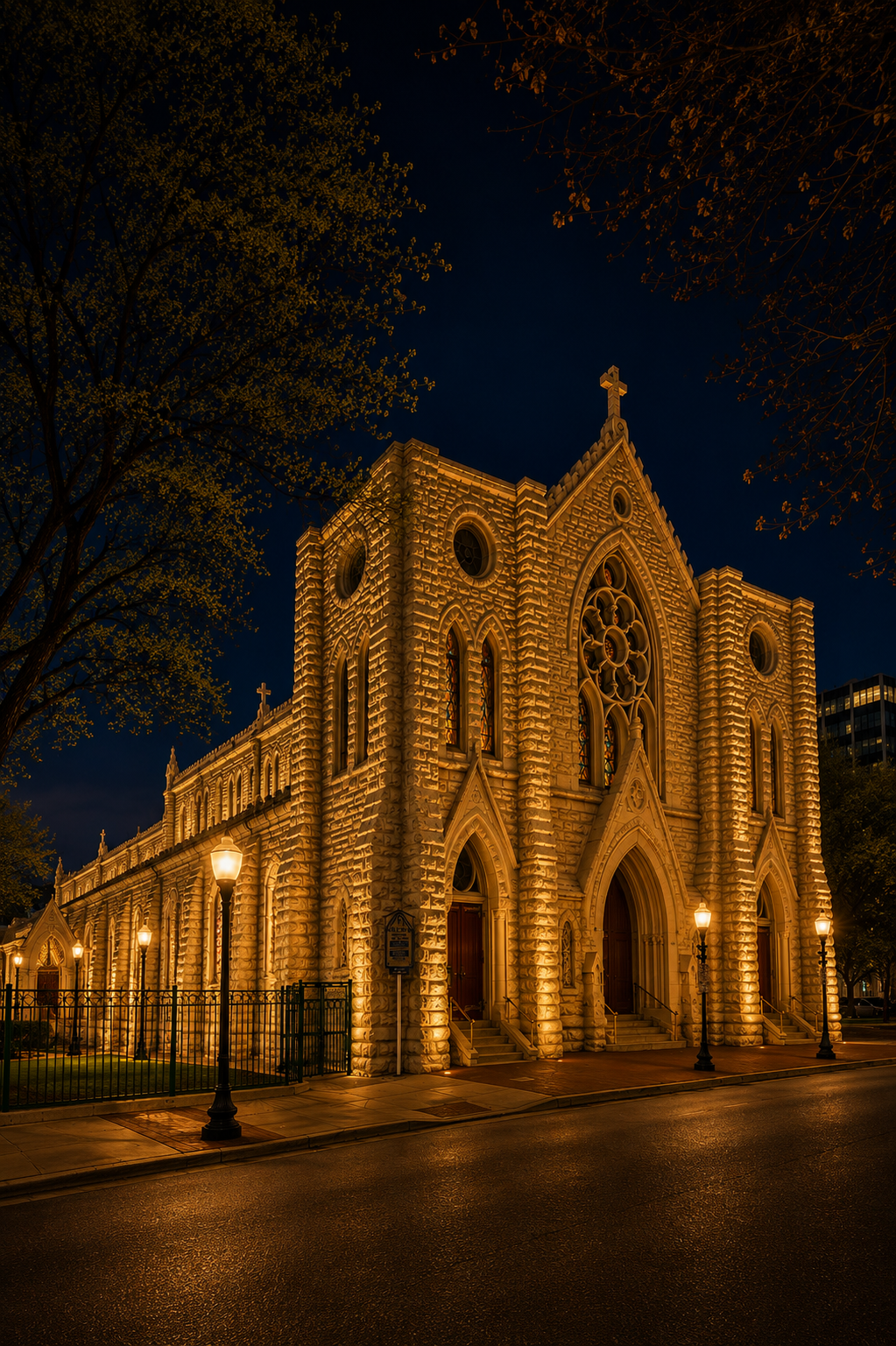
Construction of the St Patrick Cathedral started in 1892.
In a city known for cattle drives, cowboy culture, and modern growth, there is a place in Downtown Fort Worth where history feels beautifully alive. Rising above the streets near the center of the city, St. Patrick Cathedral stands as one of Fort Worth’s most treasured landmarks, blending spiritual significance, architectural beauty, and the enduring charm that makes Cowtown unforgettable.
Long before Fort Worth became the thriving urban center it is today, Catholic families in the area gathered quietly in homes for worship. Beginning in 1870, Father Vincent Perrier traveled to Fort Worth twice each year to minister to local Catholics, often meeting inside the Carrico family home. As the city grew, so did the need for a permanent parish. Fort Worth’s first Catholic church, St. Stanislaus, was established on Throckmorton Street and became the foundation for what would become St. Patrick Cathedral.
Construction of the present cathedral began in 1888, with the church officially dedicated in 1892. Designed by architect James J. Kane in the Gothic Revival style, the cathedral immediately became one of the city’s most striking structures. Its towering architecture, stained-glass windows, and timeless stone exterior continue to transport visitors to another era, offering a peaceful contrast to the energy of the surrounding downtown Fort Worth.
Over the decades, St. Patrick Cathedral became more than a church. It became a symbol of Fort Worth’s growth and resilience. In 1953, it was elevated to co-cathedral status when Pope Pius XII renamed the Diocese of Dallas to the Diocese of Dallas-Fort Worth. Then, in 1969, Pope Paul VI officially created the Diocese of Fort Worth, cementing St. Patrick Cathedral as the spiritual center and seat of the bishop for the new diocese. Today, the cathedral remains deeply woven into the cultural fabric of Downtown Fort Worth.
Listed on the National Register of Historic Places, the St. Patrick Cathedral Complex includes the cathedral, rectory, and St. Ignatius Academy, all recognized for their historical importance. Walking through the grounds feels like stepping into a living chapter of Texas history.
What makes the experience even more special is its location in the heart of Downtown Fort Worth, where historic charm and modern innovation exist side by side. Just blocks away, visitors can explore Sundance Square, known for its red brick streets, shopping, nightlife, and entertainment. Nearby, the peaceful waters and architectural beauty of the Fort Worth Water Gardens offer another reminder that Fort Worth has mastered the art of blending old and new.
Downtown Fort Worth captures the spirit of both the 1800s and the 2020s. Historic buildings stand proudly beside sleek skyscrapers, while culture, business, and community continue to converge in one of Texas’ most dynamic urban centers. In many ways, St. Patrick Cathedral perfectly represents that balance. It is a reminder that even as Fort Worth continues to evolve, its heart and history remain beautifully intact.