

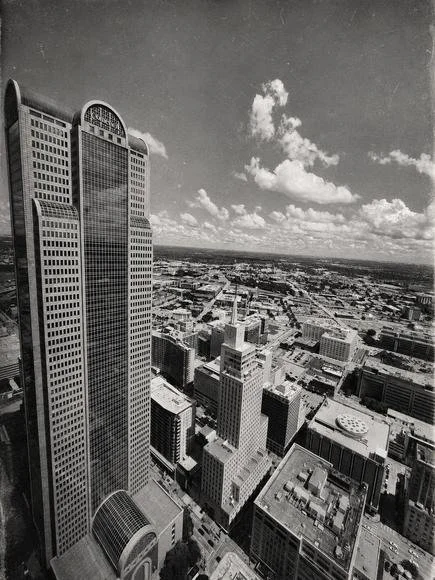
View of Dallas from the 50-Story Santander Tower
In the 1970s, Dallas was a city discovering just how far its ambitions could take it. Energy prices surged, business expanded, new buildings transformed the skyline, and families across the region embraced a growing sense of possibility. Dallas was becoming more than a major Texas city. It was developing an identity as a center of business, innovation, culture, and opportunity.
The decade brought an extraordinary transformation to downtown. Corporate offices climbed higher into the sky as new towers reshaped the cityscape. Construction crews worked throughout the city, building offices, hotels, restaurants, and gathering places that reflected Dallas' growing confidence. Reunion Tower began rising in 1974, eventually becoming one of the city's most recognizable landmarks. When it was completed later in the decade, its distinctive illuminated sphere gave Dallas a new symbol visible from miles away.
Transportation was changing just as dramatically. Dallas Fort Worth International Airport opened in 1974, creating a massive new gateway between North Texas and the rest of the country. Its enormous scale reflected the region's growing importance. Business travelers, families, entrepreneurs, and visitors could now connect with Dallas more easily than ever, helping strengthen the city's reputation as a destination for business and travel.
Growth extended well beyond downtown. North Dallas and surrounding communities such as Richardson, Plano, and Garland experienced rapid suburban development. New neighborhoods offered families brick ranch-style homes, spacious yards, two-car garages, and modern conveniences. Homes commonly featured sunken living rooms, wood paneling, earth-toned kitchens, and shag carpeting, creating a distinctive look that instantly brings the decade to life.
The automobile shaped everyday life. Major highways such as the LBJ Freeway and Central Expressway connected neighborhoods with downtown offices and growing commercial districts.
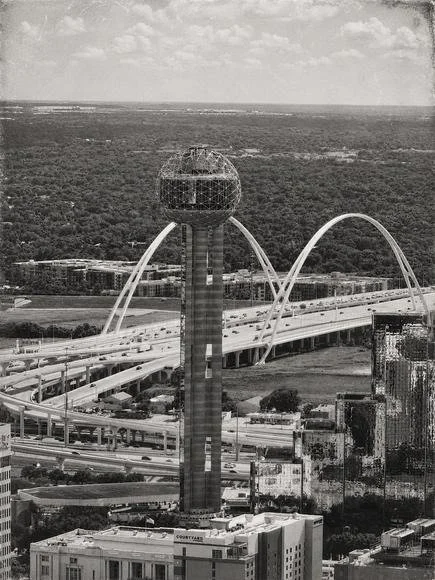
Construction on Reunion Tower Began in 1974
Each morning, families headed into the city while construction crews, business professionals, teachers, engineers, and entrepreneurs helped keep the region moving. Dallas also developed a reputation for entertainment and culture. Deep Ellum became a destination for blues, jazz, and live music, while downtown offered restaurants, shopping, hotels, and elegant social events. Historic destinations such as the French Room and Turtle Creek attracted visitors looking to experience the city's increasingly sophisticated atmosphere. Annual celebrations brought elaborate decorations, international performances, and unforgettable evenings that showcased Dallas' flair for spectacle.
For families, the 1970s were filled with simple moments that helped define the era. Children rode bicycles through neighborhood streets, played outside until dinner, and gathered around televisions in the evening. Families enjoyed new homes, weekend outings, restaurants, sporting events, music, and the excitement of watching their city grow.
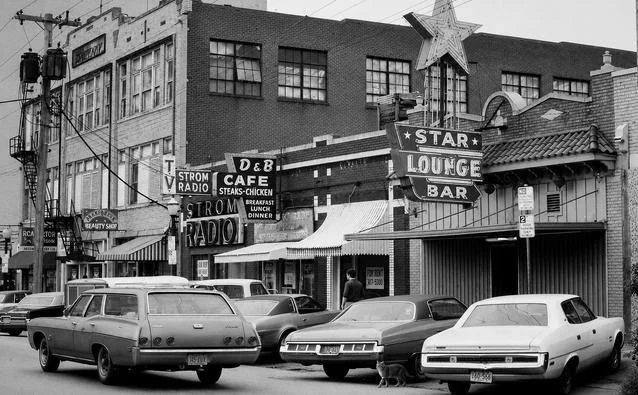
Dallas Became a City of Culture and Growth
By the end of the decade, Dallas had established itself as one of America's most ambitious and dynamic cities. Its skyline had changed, its neighborhoods had expanded, its connections had multiplied, and its cultural identity had grown stronger.
The Dallas of the 1970s was a city looking forward. Every new road, home, tower, airport connection, restaurant, and neighborhood represented another step toward the future. That spirit of ambition became one of the defining characteristics of Dallas, helping lay the foundation for the remarkable metropolitan region we know today.